

How Could I Miss it?
It's National Forage Week (June 14-20, 2026)

How could I miss the beginning of National Forage Week?!
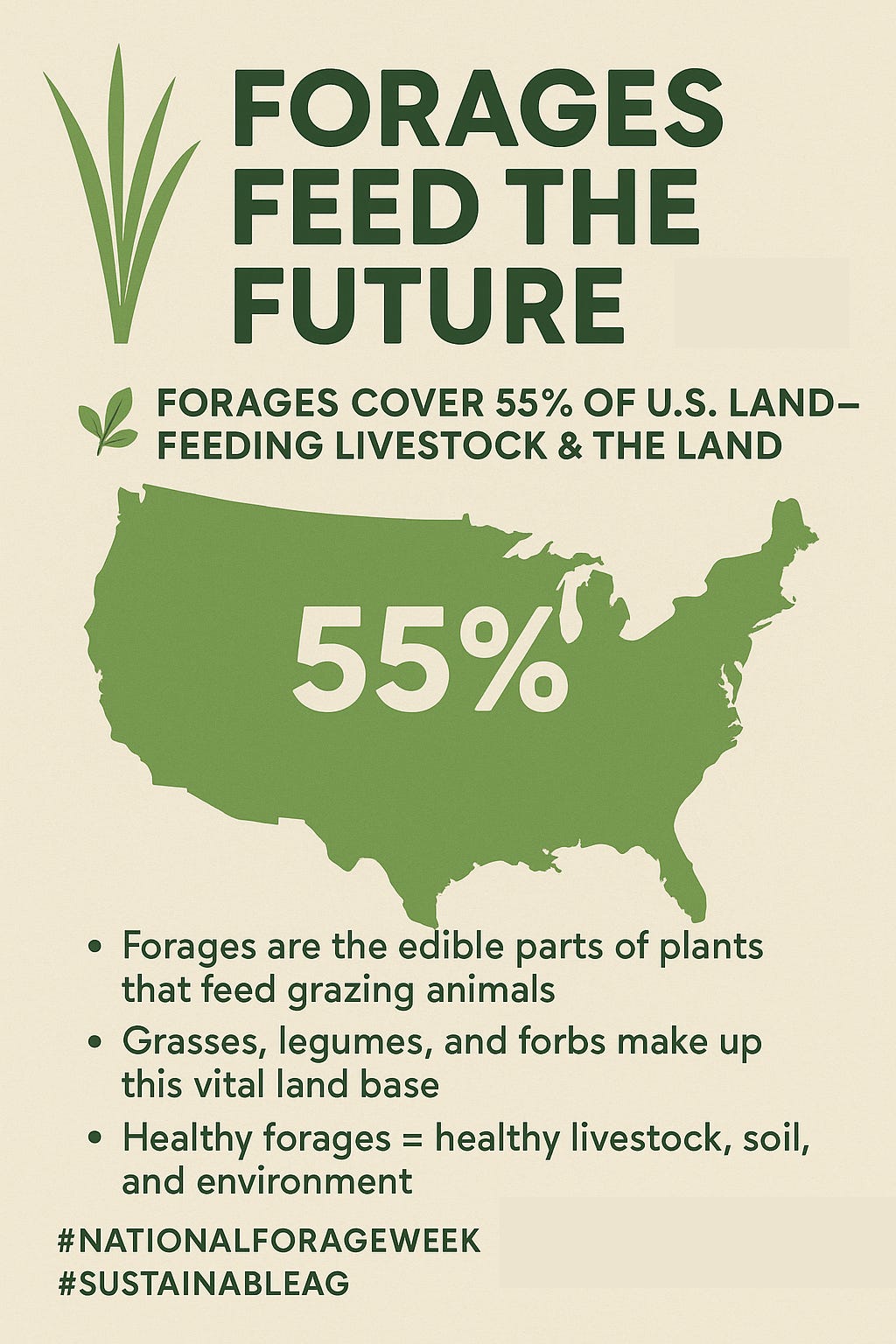
As a forage agronomist, former Extension specialist, longtime member of the American Forage and Grassland Council (AFGC), and someone whose professional life has revolved around grasses, legumes, grazing systems, hay, silage, and livestock nutrition, I should probably have had this article written weeks ago.
Instead, I was traveling, speaking, and thinking about topics that often seem far removed from forages: metabolic health, food systems, public policy, and chronic disease.
Then it struck me.
Those topics aren’t far removed from forages at all.
In many ways, they begin with forages. In fact, one could argue that much of civilization begins with forages.
When most people think about agriculture, they rarely think about forages. They think about food. They think about crops. They think about livestock. They may even think about soil. But few think about the grasses, legumes, and other forage plants that quietly support much of life on Earth.
That is what National Forage Week celebrates.
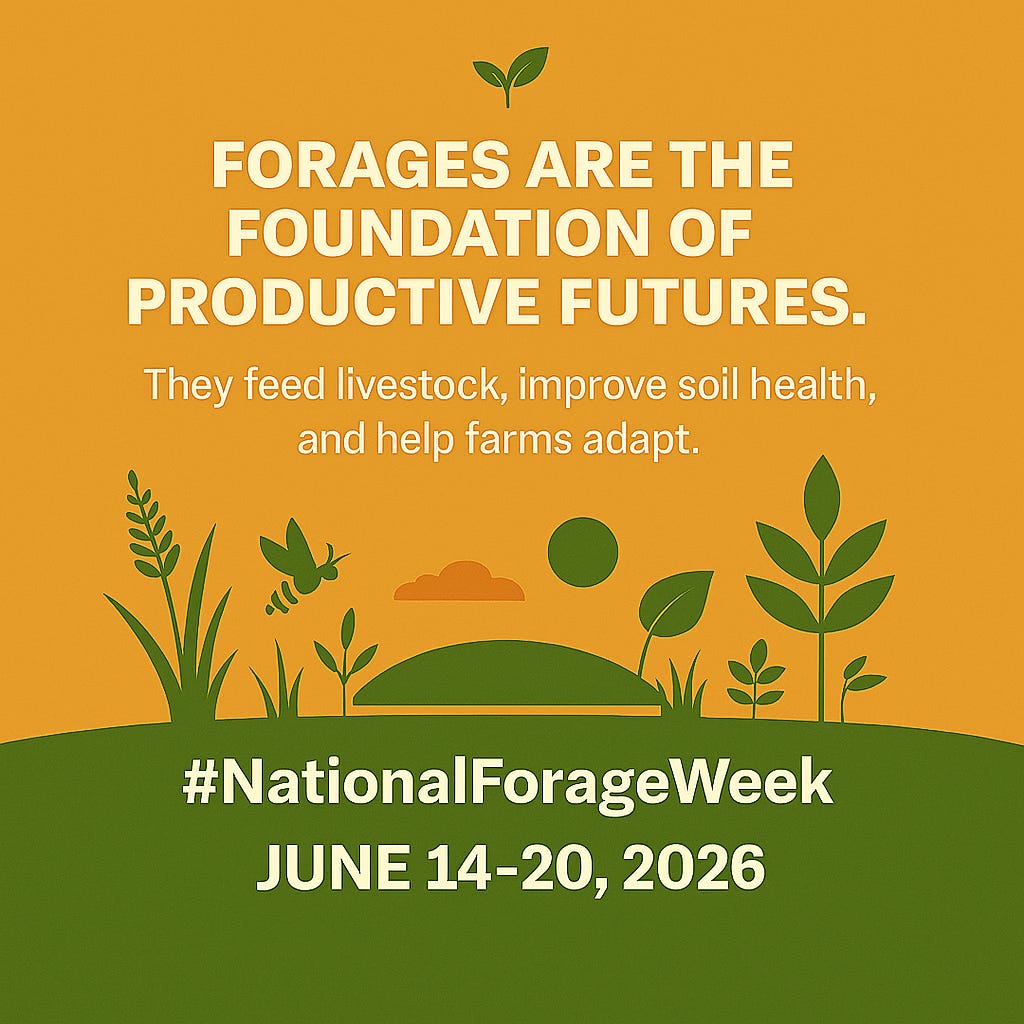
Forage (n.). Edible parts of plants, other than separated grain, that can provide feed for grazing animals or that can be harvested for feeding. Allen et al., 20111
National Forage Week is organized by the AFGC, an organization that has played a central role in forage education, research, and outreach for decades. AFGC has been one of my professional homes throughout my career. Through decades of membership, committee work, leadership opportunities, and friendships, it connected me with researchers, educators, producers, and industry leaders who share a commitment to the stewardship and utilization of forage resources. I encourage you to see if there’s an affiliate council in your state. Yet for all the work done by them and other forage professionals, most people rarely stop to consider the fundamental role these plants play in their own lives.
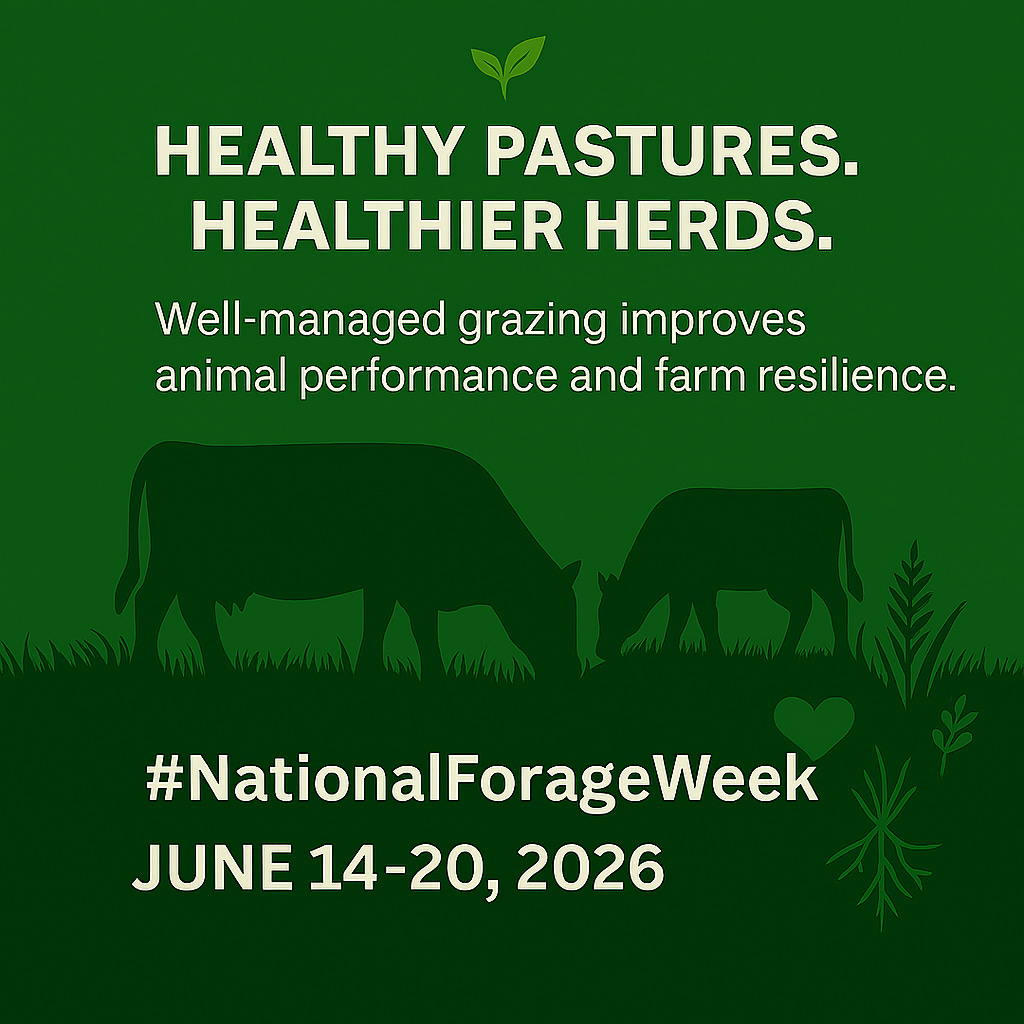
Forages occupy a unique position in our food systems. They are the primary means by which sunlight is converted into the biomass that supports grazing animals across vast landscapes. Through photosynthesis, forage plants capture carbon dioxide from the atmosphere, combine it with water and nutrients from the soil, and create the carbohydrates, proteins, and other compounds that sustain ecosystems—both above AND below the soil surface.
Despite its name, Kentucky bluegrass isn’t from Kentucky.
Today’s vast array of forage species and cultivars traces its origins to plants selected from the world’s grasslands. Through centuries of selection and plant breeding, traits such as yield, persistence, forage quality, and pest resistance have been improved. Many of these species have spread far beyond their native ranges—sometimes intentionally, sometimes not. For example, Kentucky bluegrass, Poa pratensis, is native to Europe, Asia, and parts of northern Africa, not to Kentucky and not to North America. It was introduced by European settlers and became particularly associated with the limestone soils and pastures of Kentucky, where it thrived and helped create the state’s famous “Bluegrass Region.”
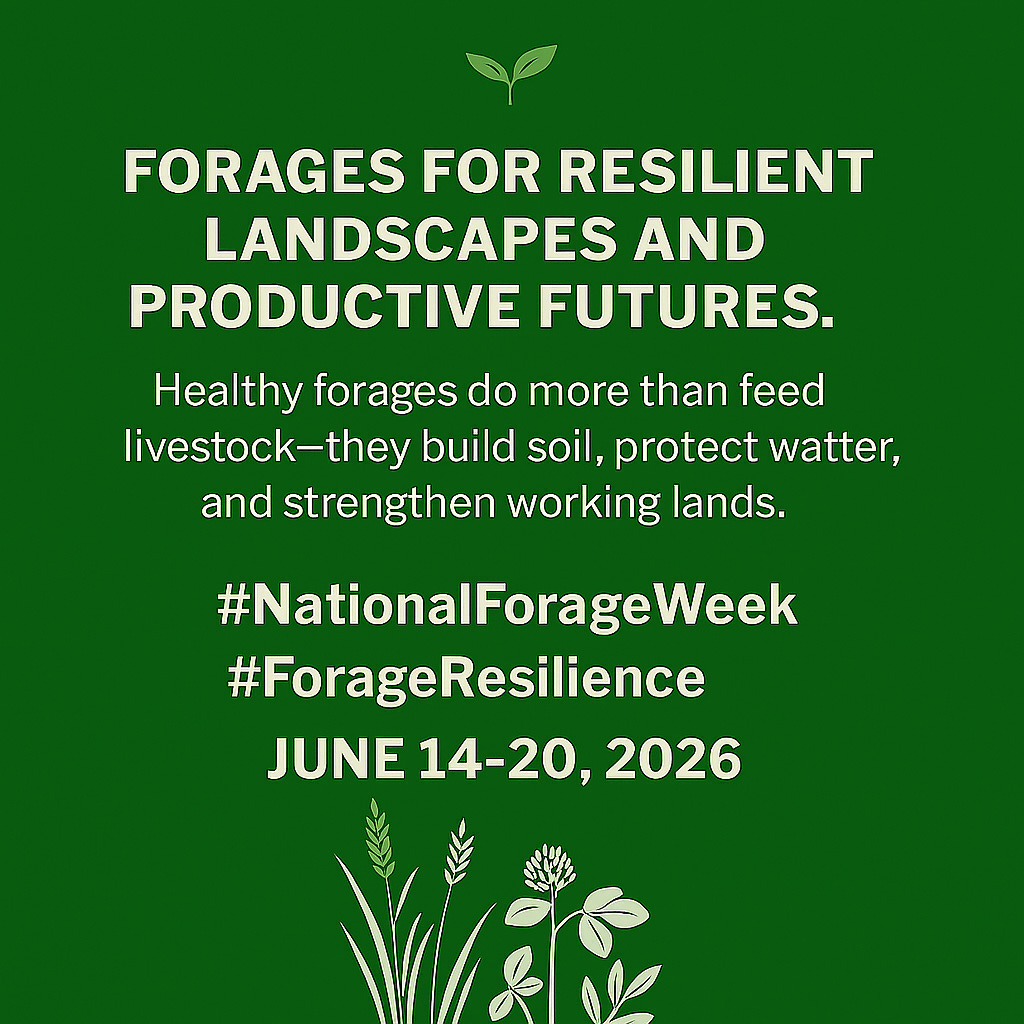
Only a relatively small portion of Earth’s land surface is suitable for crop production. Much larger areas are too dry, too steep, too rocky, too shallow, or otherwise unsuited for cultivation. Yet these lands can often support forage plants. Ruminant animals—cattle, sheep, goats, buffalo, and others—possess the remarkable ability to convert those forage resources into foods that nourish people. Through their symbiotic relationship with rumen microbes, they can utilize cellulose and other fibrous materials that humans cannot digest.
In this sense, forages are not merely animal feed. They are the foundation of an extraordinary biological partnership that transforms sunlight, grasslands, and microbial fermentation into human food. National Forage Week is also a reminder that forage systems provide benefits beyond food production. Well-managed grasslands can protect soil, improve water infiltration, support biodiversity, cycle nutrients, and store significant amounts of carbon in their soils.
Healthy forage systems contribute to healthy landscapes. Healthy landscapes support healthy livestock. Healthy livestock produce foods that contribute to human health.
Forage may be the most overlooked component of human nutrition.
The world’s edible protein and energy ultimately begin with photosynthesis, but the majority of it can only reach us because ruminants can harvest nutrition from landscapes and biomass that would otherwise produce no food for people.
The connection between grasslands and public health is rarely discussed, but it may be one of the most important relationships in our food system—especially when many of the nutrients most difficult to obtain from plants alone are supplied through foods produced by grazing animals.
The next time you drive past a pasture or hay field, consider what you’re seeing.
You’re not just looking at grass.
You’re looking at one of humanity’s most important resources.
Happy National Forage Week!
Allen, V. G., C. Batello, E. J. Berretta, J. Hodgson, M. Kothmann, X. Li, J. McIvor, J. Milne, C. Morris, A. Peeters, and M. Sanderson. 2011. An international terminology for grazing lands and grazing animals. Grass Forage Sci. 66(1):2–28. https://dx.doi.org/10.1111/j.1365-2494.2010.00780.x