

Some Bridges Already Exist
“Random” Connections

I missed my goal of posting on Tuesday this week.
One reason was that I was attending the joint meeting of the American Society of Animal Science and the Canadian Society of Animal Science in Madison, Wisconsin, where one seemingly random conversation led to another.
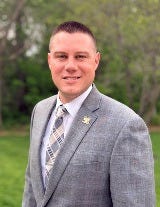
About midway through the meeting, I was talking with Dr. Jay Johnson (University of Missouri) about his fascinating work on the effects of heat stress during pregnancy in sows—not only on the offspring, but even on subsequent generations. I’d only just met him. As our conversation turned toward my long-standing interest in therapeutic carbohydrate reduction and metabolic health, he paused and said, “You really should meet Lance Baumgard.”
Thanks to a quick exchange on social media, we arranged to meet before his award lecture.
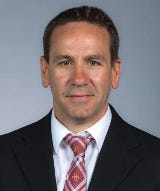
I arrived a few minutes early.
One of his slides was already on the screen.
It was about Otto Warburg!
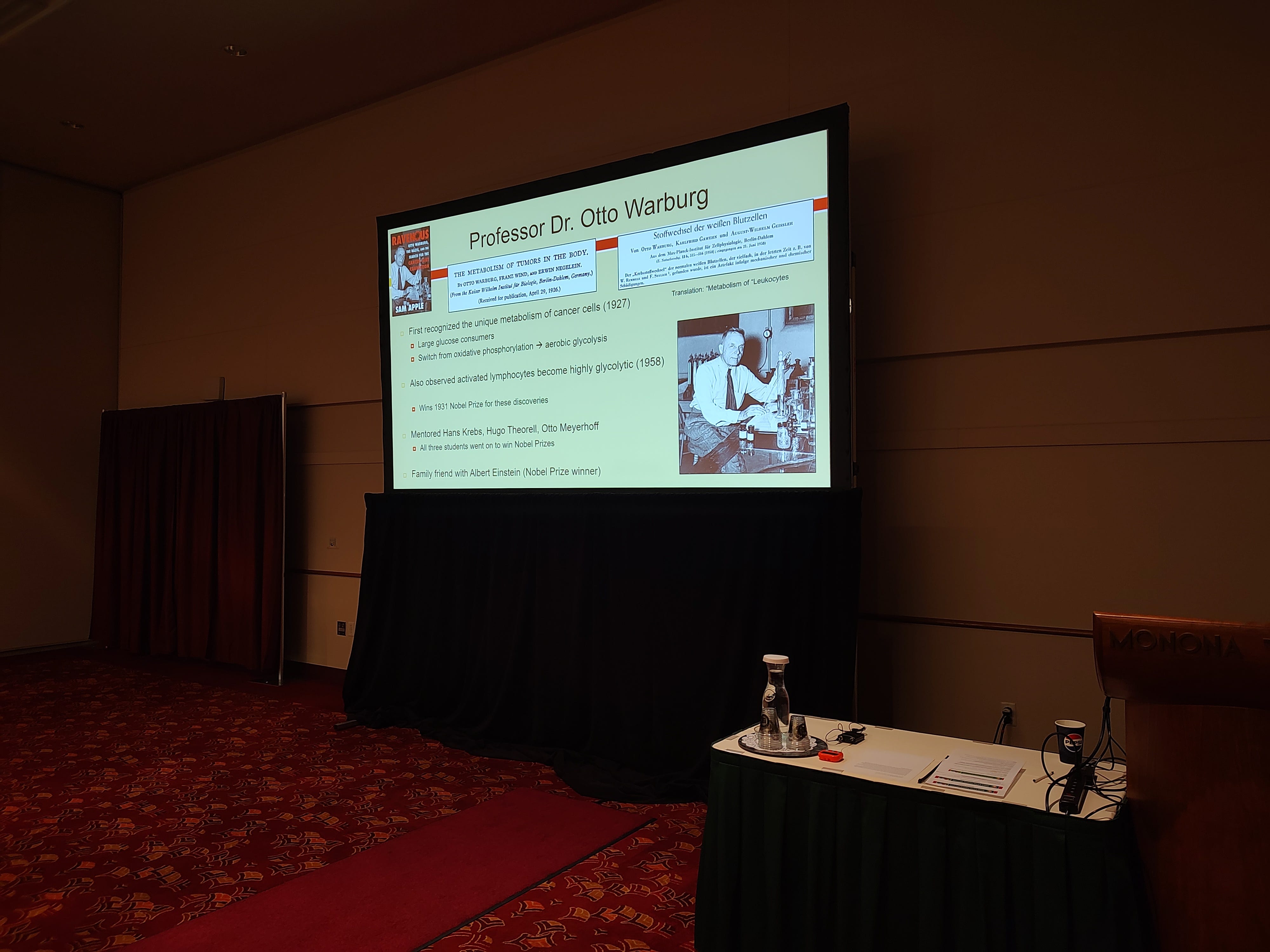
For those interested in metabolic health, Warburg should be a familiar name. Readers familiar with Sam Apple’s excellent biography Ravenous will recognize Warburg as one of the giants of twentieth-century biomedical science. He first described the unusual glucose metabolism of cancer cells and later recognized that activated immune cells also become highly glycolytic. His work helped lay the foundation for what we now call immunometabolism.
I had never before seen Otto Warburg featured in a presentation at an animal science meeting.
It immediately caught my attention.
During our conversation, Dr. Baumgard mentioned that his own skepticism of human nutrition science and policy began after reading Gary Taubes’ classic Science article, The Soft Science of Dietary Fat. That was another unexpected connection.
I’ve suspected for years that many researchers at our land-grant universities are generating knowledge directly relevant to modern metabolic health—even though they may not identify with the metabolic health community, and many in that community are unaware of their work.
The science is often remarkably compatible.
The conversations simply haven’t happened.
Animal scientists studying insulin action, nutrient partitioning, immunometabolism, amino acid metabolism, heat stress, lactation physiology, and developmental programming are asking questions with profound implications for human health.
One of the missions of Grass Based Health has always been to reconnect disciplines that once shared common questions but now too often work in isolation.
Sometimes those bridges begin with research.
Sometimes they begin with a conversation.
This week, I was reminded that some of those bridges already exist.
We simply need to cross them.
Congratulations to both Dr. Jay Johnson and Dr. Lance Baumgard on receiving national ASAS awards this week. It was a pleasure meeting both of them, and I look forward to learning more from their work. I suspect you’ll be hearing much more about the work of Dr. Johnson, Dr. Baumgard, and other animal scientists whose research deserves a broader audience in the metabolic health community.
"The science is remarkably compatible"
When the animal scientist has made discoveries that are in synchrony with other disciplines it makes sense. It is a sign that we are on a pathway of truth.
Amazing how interrelated everything is. I hear family members who basically believe that we eat calories. They can't seem to fathom that what we eat is nutrients not energy.